notesThe Whistle SmithThe Whistle Smith WhistlesThe Whistle Smith StoryAbout The Whistle Smithnotes

Buy the Latest WhistleSmith Whistles in our Online Whistle Store

Order Mon-Sat 9-5pm EST at 1-800-675-4206 creditcards.jpg Accepted

The WhistleSmith is a Division of Rod Brewer Designs Inc.

July 20, 2005

What kind of whistle is it?

I had a first time whistle buyer drop in the other day and it was obvious that he had spent a lot of time reading about whistles on line. Here is some of what we talked about.

"If they don't cost a penny and their not made of tin...Why are whistles called that any more? My reply was that they should just be called whistles, plain and simple. The whistle is so common to so many kinds of music world wide today that the old terminology just doesn't fit. There are probably more people playing whistle in Africa than there are people in all of Ireland and Scotland combined. The music is not the same, but that only shows the wonderful versatility of the whistle and the variety of music it can be used for. That is why I call my whistles "Wicked Good Whistles".

"What's the deal with small hands fingering? Is that something just for kids or am I not understanding that part of how a whistle is made?"

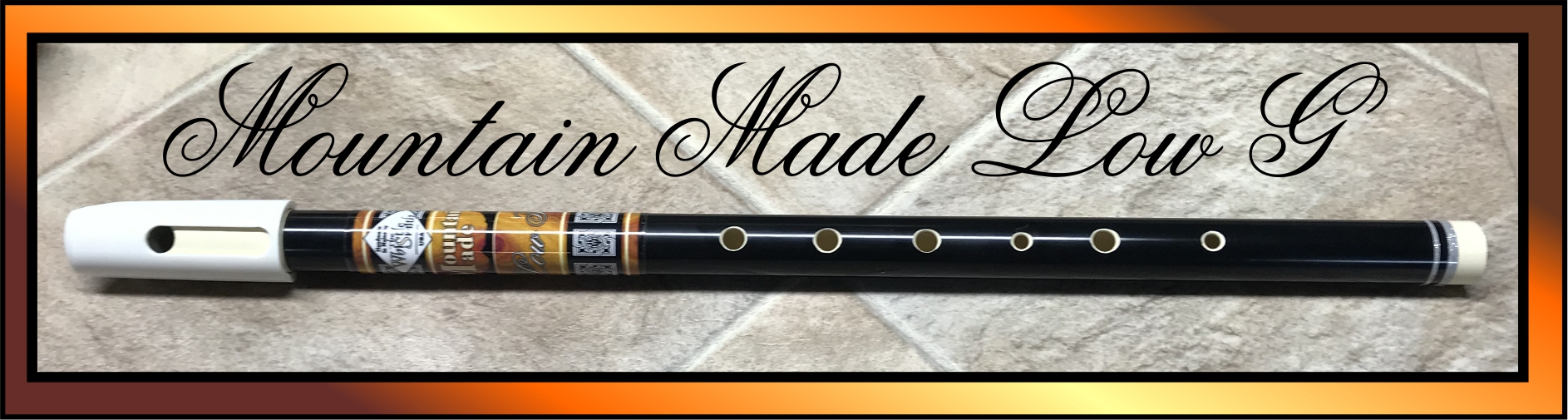
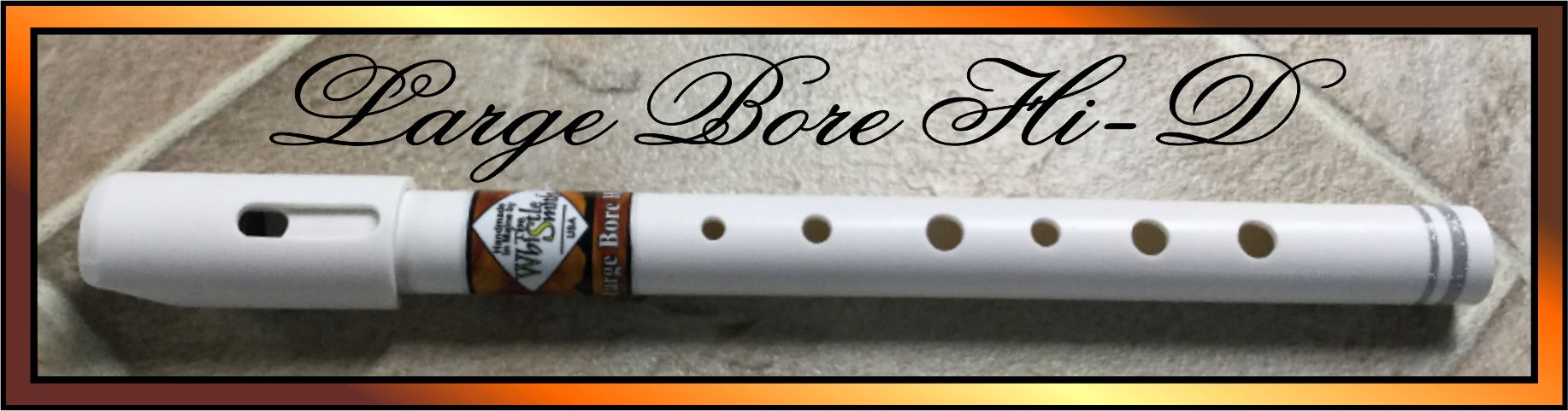
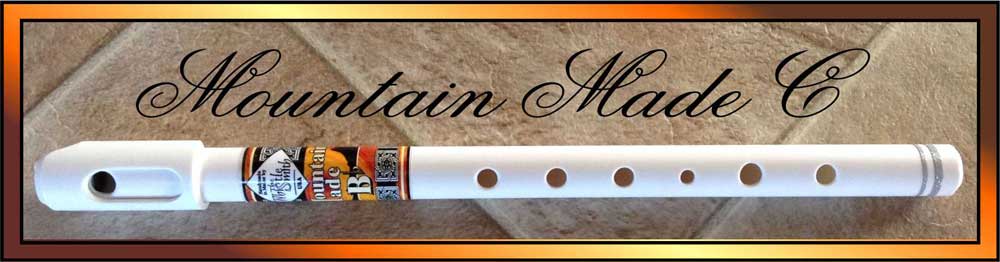
I replied that on small whistles in the higher keys that small hands fingering was not important. Everyone can reach the holes on a D, C, or Bb whistle without any strain. When you get down to the low whistles, it is common to have holes that are too large and too much reach in the fingering to be comfortable. If your hands are stiffer than they used to be and the carpal tunnel seems a little on the longer side, and you have a touch of arthritis in a joint...then small hands fingering is a must. I also pointed out that I had started on my whistle making because my Granddaughter Marilyn was so disappointed when she received her first two low whistles and could not play them. You have to see the look of satisfaction when someone with very small hands and reach plays that big low whistle for the first time.

"There are so many keys, how do I pick out a whistle to start?" I had been discussing the same subject with a friend the night before and this is the conclusion that we had come to. High keys and small size are the only whistles for jigs and really fast music. That's the reason that Irish music is almost always written in the key of D. It stands to reason that a large low whistle is going to play slower and is more suitable for ballads and waltzes etc. If you are not going to play Irish or fast music and instead wish to play Traditional, Country and Western, John Denver, Blues, Ragtime (you get the idea!) then start out on a Low G or even a Low D and play away. A man that is almost seven foot tall is going to dislike playing a tiny little whistle with his fingers jammed together. There is no reason not to start out playing a whistle that fits your style and taste in music.

"Your whistles have no metal, wood or glue in the mouthpiece and most have none of those materials in the entire whistle, How come?Well, I am very leery of wooden plugs in the mouthpiece of a whistle , because many types of wood are toxic. A lot of people are allergic to walnuts for instance, and any contact with walnut oil or the nut itself can cause an extreme allergic reaction that can be fatal. Many exotic woods like coca bola and teak, that are fine for furniture, should not be put in your mouth. A lot of whistle players chew on the mouthpiece and I heartily recommend not doing that for health reasons. Ten years ago I got an incrediable reaction to a piece of butternut wood doing a small furniture project and almost ended up in the hospital. There is no reason to use treated woods in a whistle other than aesthetics as it has absolutely no bearing on the sound of the whistle at all.

If you chew on a mouthpiece made of preserved wood or wear it down and expose particles of wood, you are going to be open to an allergic reaction or worse. Wood is treated with plastic to make it machinable, wear resistant, and non absorbant. It is basically a process to preserve wood that is unique in appearance to be made into writing pens and novelties on a wood lathe and not produced specifically for whistles. One of the most prized woods for pens is spalted wood. Spalting is caused by decay and mold in the wood and is not recommended by anyone for consumption or contact in your mouth or digestive system.

Likewise metal residue in a whistle is harmful and chewing on a metal mouthpiece will absolutely ruin your tooth enamel over a short period of time. I do use a copper connector in a couple of models of whistles as slides, but you are not in contact with those in any manner because the slide is inside the body of the whistle and not in your mouth or hands.

"I know there is a good answer for this , but why do you use the Bristol white and tan kind of pipe in these whistles" There a several reasons, the first being that the material is a very high tech material and the quality control for this type of pipe is very good. It is made to carry both hot and cold potable(drinking) water and is extremely strong. It has a wonderful finish right from the factory and the inside bore is better than anything you would ever bore out of solid rod or wood. It has properties like stretch, memory, and elastisity that can be used to good advantage in making whistles. It machines with regular wood working tools like bandsaws, routers, drills, and shaping machinery and there is practically no dust residue in the workplace. Because this type of plastic material is heavy, it does not float in the air like wood dust and can be collected on a static metal plate instead of off the floor. I make all the parts for the whistles and flutes from four sizes of piping and I don't buy any connectors from a supplier. As long as I have pipe in my inventory I will never run out of the pieces to produce or repair any model whistle I have or will make in the future. A whistle made from this type pipe is virtually unbreakable, plays outdoors when a metal instrument would freeze up, and contrary to some published information, always stays very white. Those people that would try to convince you that it ages and looks like old ivory after a period of time... just have a dirty whistle that needs a good washing. I have used Bristol pipe for stakes outdoors in my garden that have been there for six or seven years and they are still bright white so that should be proof of the finish on the material.

"What kind of warranty do you give for your whistles?" .I personally, don't think a warranty is any good at all if you cannot talk to the person who is going to fix your problem and explain what you need. I am not a vendor, a distributor or even a good salesman. I listen well and it is my pleasure to make a customer happy. When someone takes the time to call or e-mail it means they have enough interest to spend a bit of time and get a proper answer to their inquiry. All the instruments that are presently available and including future designs will be modular. Every instument can be easily repaired, updated, and refurbished to brand new condition. I can send a replacement piece for your whistle or flute to correct any problem you might have on the same day you call. I'm never out of parts and it pays to check on updates available for a specific model and key of whistle(like a new style mouthpiece), because I will always be making changes to improve either the instruments or they way they are constructed. If anyone has a damaged whistle, they need only to send it with round trip postage and I will refurbish it, check the tuning and replace parts if needed for as long as they own the whistle. There is a $10. flat charge to make the whistle like new.There is a restock charge of 25% on custom made whistles and flutes and returns are limited to seven days. Return shipping is the responsibility of the buyer.

Posted by The WhistleSmith at 3:18 PM | TrackBack

July 19, 2005

Summer Visit from my Granddaughter and Pug News

My granddaughter Marilyn is up for a visit and is helping me in the shop. We are currently evaluating everything that has been done on the Auto Flutes and Fifes , because she has not seen the work going on over the past winter and she is taking notes, asking questions on the changes and making sure that everything is documented and put down on the blueprints for each model. We are also taking photos of machining and assembly of each model for future reference and cataloging the inventory of parts available.

Marilyn is also doing the modeling for some advertising shots and learning photo editing. This is a lot of information and responsibility for a sixteen year old, but she is interested in the business and it is my hope that one day she will be ready to be a Whistle Miss on her own.

While we were working in the shop the other day, she mentioned that our pug, Hai Yu not only enjoys the whistle being played, but he generally falls asleep when she practices in the evening. I then remembered that our Shar Pei, Rugby and his buddy Ripley the cocker spaniel also enjoyed the whistle and contrary to popular belief, were never bothered by the high notes. Hai Yu actually loves the low whistle and sits in my lap (and in the way) when I play with Marilyn.

If you give your animals a low, slow lesson on the whistle where they can get used to it and not be afraid, they will be comfortable and enjoy the music. Avoid high key whistles until the animal knows that the music is not a command. Give them some distance from the sound (maybe outside for a while) and they will acclimate to the idea more readily. Hai Yu is particularly fond of Amazing Grace and Danny Boy while chewing his bone. He is a bilingual dog from Quebec, Canada and obeys both French and English. He is a purebred dog, but I tell everyone he is a Black, French Canadian, Chinese Pug and never met a game he didn't like. He is not allowed in any of the whistle making areas, simply because he believes everything might be food and Bristol pipe looks like a dog bone to him.

Posted by The WhistleSmith at 3:04 PM | TrackBack

Places to Play Your Whistle

When I mentioned that whistles need good acoustics to be their very best, I began to make a list of places to play. My brother Alan and I used to team up on guitar and the banjo and do the entertaining around the campfire in the evening at St. Froid lake. Folks around the lake would hear the music and drop by the big fire and listen for a while and cook hot dogs and marshmallows. Some nights we would draw a large crowd and on the Fourth of July, we would have an all night party with fireworks over the lake.

There is no place better to play than a big lake at night with a strong echo and the woods for a background. I remembered that sound and when I vacation, I travel with a whistle tucked in my luggage. Overpasses and bridges make awesome ampitheatres for playing the whistle.

My brother in law in Connecticut possesses a railroad bridge made of solid concrete just down the street from his house. I discovered it on a walk to town and it is the greatest sounding place to play a whistle you could ask for. Passersby often stop and listen for a bit and remark that they would have never thought about playing music there.

Empty buildings of about every sort are sound stages just waiting to be tried. This is a picture of the largest barn in northern Maine and was the site of many gatherings and barn dances. Although it is now gone, many folks remember the wonderful acoustics it possessed.

I have played whistle for folks cleaning fish in Marathon, Florida in the Keys, ladies selling at yard sales along the road, people waiting for a bus, an Amish family in a furniture store in Lancaster, the Captain of a fishing boat looking for schools of fish, folks under my porch, visitors in the Acoustically Perfect Barn out back, and a lot of places in between.

There is a spot in the middle of my field that is bounded on one side by my neighbors house and on the other by my barn. If you stand exactly right, you get a double echo off both buildings and in the evening it is a great place to play some important music. I'm sure you can find places like that everywhere you go if you are just aware of what you are looking for.

Posted by The WhistleSmith at 2:01 PM | TrackBack

What our Whistlers are Doing and Going

Boy Scout Troop 177 from Washburn, Maine is going to the National Jamboree at Fort A.P. Hill in Virginia for the National Jamboree. There will be sixteen youths and 10 adults attending this year. I made their Jamboree shirts for them and they were looking for items to take that they could swap with the other scouts. My wife Nadiene thought that a crisis whistle was the perfect item, so she assembled a big bag full and sent them along for the boys to make friends with. I suggested to Larry Harrison, the scout master that he should keep one whistle for himself, so he could get the troop back together again at the end of the day.

The girl scouts have been practicing on their whistles since their visit last winter and recently performed in the World Band that was part of the International Food Festival at Northern Maine Community College. Their leader, Penny Kern remarked that she was enjoying playing her whistle as much as the girls were and they are making plans to continue with their project.

The local winners in the Soap Box Derby and the other regions in Maine are leaving for Akron, Ohio for the Nationals. Lynn Brabant and her son Luke came by to get the special shirts for the hundred plus folks who are going to the event. Luke needed something to "throw at the crowd" when the Derby kids parade through town, so we made another bag of crisis whistles and now he will have something special to swap and toss to the crowds during the event.

We have received many reports back from the recipients of whistles. Last season, I included one in every eBay whistle that we sold and donated over 1500 of them for fund raisers, auctions and customers and friends that dropped by. One lady remarked that her horse threw her into a patch of red alder bushes and she couldn't get out of them on her own. The horse came home empty, but when people came looking for her, they couldn't see her down over a bank and hung up in the brush. The crisis whistle got their attention in a hurry and help was on the way.

My wife came back from the Post Office one afternoon last winter and remarked she was glad she had a whistle on her purse. The Post Office parking area was busy, but no one paid any attention when she started to open her car door and get in and a drunken man attempted to force his way into the vehicle. She blew a loud burst on the crisis whistle and it startled the man enough for her to gain entry into the car and another blast from the whistle brought help. A local policeman was summoned and the man was taken into custody. This incident happened directly across from the police station.

Posted by The WhistleSmith at 11:50 AM | TrackBack

July 18, 2005

What makes an Auto Flute and Fife Different?

I have recently had inquiries about the new Mystic Auto Flutes and Fifes. Why are they Mystic? and what is the difference between the two instruments?

Well...the Mystic part comes from the fact that most folks cannot see how the instruments play. Without exception, everyone picking up the instrument puckers up and tries to play it like a regular flute,because the hole you blow in doesn't look like a hole at all! These flutes and fifes are made to play automatically and require no special skill that a whistle player doesn't already possess. The fingering is the same as a regular whistle that everyone learned to play and the tone is very clear and air requirements are minimal.

Because these instruments are purpose built ( by that I mean that I designed them to be the way they are and perform in a certain way) they do not fall into the "traditional" manner of flutes and fifes other than a general way. I believe they are the right instrument for beginning players, folks with a bit of stiffness in the joints and all of us who just want to have fun and don't have that much time to practice. Every time I say things like this, someone will write and correct my assumption by saying that "its not a toy or plaything...this is a serious instrument with great sound" as a lady in Colorado did recently. Its hard to be humble when you get a comment like that.

The Flutes are in lower keys, A,G,Low D etc. and the instrument is larger. The Fifes are smaller with higher keys, Bb, C,D etc. The fifes are pleasant sounding instruments and not shrill, but they can be played much harder than a whistle and still behave themselves in the upper octave. Folks that try the G Auto flute for the first time generally just smile, because they like the sound,and then they say "I've always wanted to play a Sideways instrument!"

The appeal of playing these instruments is the fact that you really look great playing in the flute position and others notice your ability and recognize it as being exceptional. It is a great advantage to play the Auto Flute, because you never miss a note and the sound is right on key every time.

The Sideshooter mouthpiece is adjustable by sliding slightly forward or backward to improve the ease of playing the high notes or adding a bit more volume into the low notes. Rotate the mouthpiece slightly right or left (thickness of a piece of paper) and you can add as much chiff as you like or eliminate it entirely. The best feature of both the flute and fife is that they are easy to clean and fast to remove moisture from the windway in high humidity conditions. My grand daughter Marilyn is visiting this summer for a month and she has been playing both instruments in the various keys and making comparisons for me. She just grins when I ask if they play OK. "Sure she says, you can play it sideways and thats just better." Appearances are everything when you are sixteen and looking your very best.

Posted by The WhistleSmith at 4:34 PM | TrackBack


Shopping Cart

If you are using Internet Explorer, please use CNTRL-Click to view the shopping cart.
Site Navigation
Join the Mailing List Mailing List
Enter your Email


Powered by FeedBlitz
Search


Archives
Subscribe - RSS

This weblog is licensed under a Creative Commons License.

Powered by
Movable Type 3.33
Copyright ©2003-2004 Rod Brewer Designs, Inc.