September 14, 2005
A BASKET OF THUMBRINGS FOR FALL
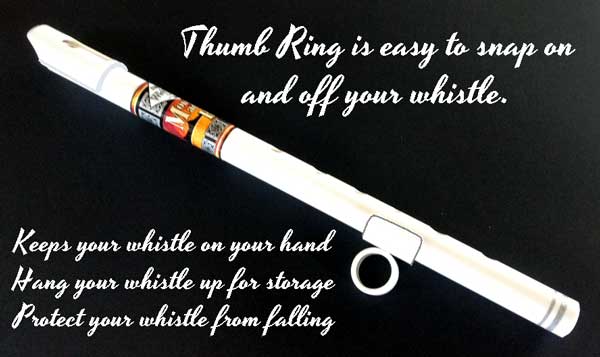
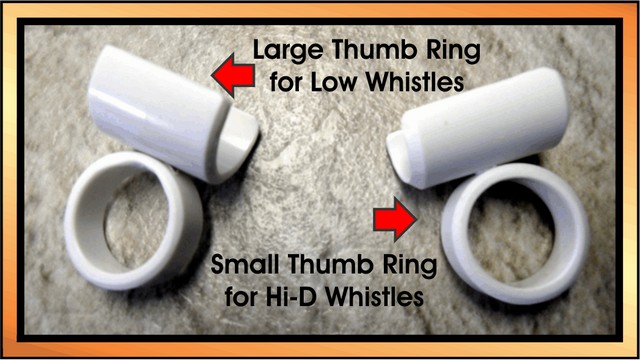
A basketful of thumbrings would hardly seem an exciting event, but after hand making this basketful I felt really grateful to be finished for a while. Actually, I recently did a marathon event of thumbring making for a client that required four hundred in a hurry and almost did my right hand in for good. These little beauties require a lot of hand work and I have improved the methods used in the process several times. The latest improvement has been to cross peen the rivets for a very tight fit and extra smooth interior on the ring section. A blacksmith of some 50 years of ability explained the set up for doing horse harness rivets on leather to me and it applies perfectly to making another improvement to the thumbring.
Posted by The WhistleSmith at
3:30 PM
|
TrackBack
UPDATE ON CLEANING YOUR WHISTLE
So many e-mailers wanted a picture of the cleaning setup I had mentioned this spring that I decided to post a picture of my top secret whistle cleaning apparatus. The woolen buff is for a 12 gauge shotgun(fits low whistles with a big bore) and will last a long time. A 410 size buff fits small diameter bore whistles.
You can use any type of drill, but cordless is great if you already own one. Be sure the drill is in tighten mode when you clean with it or the buff will unscrew and be left in the whistle. Several buffing sessions will improve the sound of any kind of whistle because the buffing head smooths the instrument inside and dries up the water.
Doing this type of buffing is not the same as using a clarinet style bore wiper, because the buff generates heat while it is turning and the heat and rotation takes out residue and polishes the inside of the instrument. If you find that your instrument wets up easily in high humidity conditions, dry silicon spray available in hardware and automotive stores can be wiped into the bore after it has been cleaned and then buffed again to produce a finish that will absolutely shed water.
Moisture in the bore will deaden sound quickly if conditions are humid because saliva is not plain water and the surface tension inside the bore makes it collect as a coating on the walls of the instrument. Silicon when buffed onto the surface makes surface tension minimal and improves the instruments internal vibration so you get more volume without having to increase the air flow.
Posted by The WhistleSmith at
2:23 PM
|
TrackBack
UPDATE ON CLEANING YOUR WHISTLE

This is a simple way to make an excellent cleaning tool for all size whistles. The materials are a 3/16" wooden dowel and a long strip of cotton cloth.
The 3/16" wooden dowel costs $.78 cents at our local Lowes and is 48" long. You will have plenty of material to make two extra long cleaning rods that will fit up to a Low D whistle.
I use a white 100% cotton cleaning towel and tear it into 2" strips the long length of the towel.
One towel is enough to last a long time, so you can be neighborly and share with a friend if you like. If you have an old pillow case, that will work well and it can be any color you have on hand.
I recommend 100% cotton because you will not get lint when you buff the bore of the whistle coming off and getting into the fingerholes and tuning joint.
You will need to cut the slot in the end of the dowel with a sharp, fine tooth saw. I use the bandsaw to do the slot, but you can use a craft saw, coping saw, scroll saw or perhaps a neighbor might cut the slot for you. If you do not wish to cut a slot (I like the slot so I can change the cloth often), you can use a dab of Elmer's Glue and wrap your cloth around the dowel and glue it on.
Wrap the cloth smoothly down the dowel by turning to the right with the dowel and feeding the cloth flat and pulling to the bottom of the dowel. Wrap enough cloth around the dowel so that it fits nicely into the bore of your whistle and let the tail end of the cloth pull down to the end of the dowel. Do not make the cloth fit too tightly or it can make a plug of cloth and be hard to remove.
The tail end of the cloth should be left loose and hang outside the whistle so you can pull the cloth out of the whistle if it should come unattached from the cleaning end of the dowel.
When cleaning and drying your whistle, you can push and pull the rod back and forth or using both hands, spin it in the whistle bore.
If you want to use your electric drill, put the drill in forward mode (the same direction you would use to drill a hole with a drill bit) and push and pull back and forth to buff the whistle bore.
If you forget and buff with the drill in reverse, the cloth will unwind and probably come off the dowel. This means you will have to pull on the tail end of the cloth and retrieve your buffing cloth out of the whistle bore. Rewind your dowel and you will be back in business.
You cannot hurt your whistle by buffing the whistle bore. The more times you buff, the smoother the bore will become and the better it will play.

Using a shot gun buff and electric drill to clean your whistle
So many e-mailers wanted a picture of the cleaning setup I had mentioned this spring that I decided to post a picture of my top secret whistle cleaning apparatus. The woolen buff is for a 12 gauge shotgun(fits low whistles with a big bore) and will last a long time. A 410 size buff fits small diameter bore whistles.
You can use any type of drill, but cordless is great if you already own one. Be sure the drill is in tighten mode when you clean with it or the buff will unscrew and be left in the whistle. Several buffing sessions will improve the sound of any kind of whistle because the buffing head smooths the instrument inside and dries up the water.
Doing this type of buffing is not the same as using a clarinet style bore wiper, because the buff generates heat while it is turning and the heat and rotation takes out residue and polishes the inside of the instrument. If you find that your instrument wets up easily in high humidity conditions, dry silicon spray available in hardware and automotive stores can be wiped into the bore after it has been cleaned and then buffed again to produce a finish that will absolutely shed water.
Moisture in the bore will deaden sound quickly if conditions are humid because saliva is not plain water and the surface tension inside the bore makes it collect as a coating on the walls of the instrument. Silicon when buffed onto the surface makes surface tension minimal and improves the instruments internal vibration so you get more volume without having to increase the air flow.
Posted by The WhistleSmith at
2:23 PM
|
TrackBack
September 1, 2005
A GREAT TIP!... from my wife Nadiene
While putting together parts for some whistles the other week, I managed to get a body completely stuck in a tuning slide. I tried as hard as I could to twist the two pieces apart, but could not budge them at all. After contemplating the problem, I was about to put the pieces in the vise when my wife, Nadiene walked through the door and wanted to know what all the fuss was about. I showed her the stuck parts and vowed there was no way they were going to come apart. "Wait just a minute and I'll be right back" she said and promptly left.
In a minute she was back and passed me a rubber disc jar opener. "You should know this works on about everything in the kitchen, even stuck canning jar covers."
Well, behind every good Whistlesmith is a good woman!
A rubber disc jar opener is the best thing in the entire world to take a stuck whistle apart with. I am now sporting three in various colors so they are easy to find in the shop. A whistle is just plain hard to grab and a vise will ruin the barrel on your whistle in an instant. These jar openers are really a sweet deal to have in your whistle bag and you won't hurt your hands when you use one.
Got an old whistle and want to take the head off the tone body? A rubber jar opener after a good soak in boiling water will definitely do the job.
Posted by The WhistleSmith at
9:05 PM
|
TrackBack